
Restaurant tech trends are reshaping how venues operate, interact with guests, and drive revenue.
From automation and personalizing guest experiences to data-driven decision-making and tools, restaurant technology is no longer a nice-to-have. It’s a must-have for competitive growth.
Whether you’re evaluating the tech in your restaurant or chain to streamline operations, improve service, or scale multi-location concepts, these tech trends cover the key innovations shaping the F&B and hospitality industries.
Let’s dive in!
Why Do Restaurant Technology Trends Matter?
By keeping up with restaurant and hospitality industry trends, restaurant owners, operators, managers, and even marketing managers and hospitality directors can:
Gain a competitive edge
Increase operational efficiency
Improve tracking to make data-driven decisions
Reduce and optimize costs
Identify guest behavior and needs
Boost sales and profits
Boost guest loyalty and satisfaction
Save time with new tech
What Are the Top Restaurant Tech Trends for 2026?
Let’s look at the top technology trends in the restaurant industry we're seeing in 2026 and beyond.
More interest in restaurant tech and software
One of the top restaurant trends for 2026 is the growing interest in the different types of restaurant technology. Concepts are constantly looking to improve and connect their restaurant tech stack to streamline daily operations.
Restaurant tech is a broad term, encompassing everything from reservation management software, kitchen operations tools, analytics and metrics software, inventory management tools, to restaurant marketing automation software.
Reservation and seating solutions
Besides looking for restaurant tech, more dining concepts are looking for advanced reservation, table management, and waitlist software.
The idea is to have a system that can integrate with various tech in the restaurant and reduce front-of-house bottlenecks.
Many concepts are looking for restaurant management software that helps them manage multiple venues, can integrate with restaurant POS systems, and grow with the business.
Data supports this trend. The global restaurant reservation software market was valued at $2.5 billion in 2024. It’s expected to grow at a compound annual growth rate (CAGR) of 8.7% from 2026 to 2033, reaching $5.1 billion in 2033.
Data-driven personalization across the guest journey
Personalization in 2026 goes far beyond adding a guest’s name in your campaigns or restaurant newsletter.
McKinsey defines personalization in marketing as “when seller organizations use data to tailor messages to specific users’ preferences.” In restaurants, this applies to both operations and marketing.
In-house personalization (Operational)
F&B tech now enables staff to recognize and serve guests based on real data, not memory.
That looks like:
Greeting returning guests by name
Seating them at their preferred table
Recommending dishes based on previous orders
Noting dietary preferences or special occasions
This type of restaurant technology turns repeat visits into tailored experiences, increasing satisfaction and average spend per guest.
In terms of marketing restaurant tech trends, we expect more F&B brands to use marketing tools to personalize marketing campaigns.
Marketing personalization
Personalization also extends beyond the dining room.
Research by McKinsey indicates brands using personalization can reduce their customer acquisition costs (CAC) by “as much as” 50% and boost revenues by 5-15%.
In restaurant marketing, this includes:
Targeted SMS or WhatsApp offers
Seasonal promotions based on guest behavior
Loyalty campaigns based on visit frequency
Modern restaurant CRM and customer database software make this possible by tagging and segmenting guests based on preferences, visit history, and spending patterns.
For example, tools like Servme allow restaurants to auto-tag guests (e.g., VIP, Weekend Regular, Sushi Lover) and trigger personalized campaigns directly from the dashboard — aligning operational data with marketing outreach.
Did you know?
Restaurants using Servme create hyper personalized experiences with auto-tags. Concepts can create their own tags like VIP, Monday Regular, Chocolate Lover, among others or use built-in tags to segment guests. This aligns operational data with marketing campaigns, ensuring better conversions.
Further reading: How to Create a Personalized Messaging Strategy for Your Restaurant

Increased adoption of AI in the restaurant industry
One restaurant technology trend we're seeing more of in 2026 and in coming years is the use of AI in restaurants.
AI has become a part of our everyday lives. So, it's no surprise it's making its way to the F&B and hospitality industries.
Many dining concepts are adopting AI across chatbots on their websites, customer support, and social media platforms. ChatGPT and Gemini prompts are popular for restaurant owners and marketers, especially in content creation.
Contactless payments
Contactless operations, including ordering and payments, continue to be at the top of restaurant owners’ list of tech to explore.
One reason is that guests are adopting technology faster than restaurants are using them. To keep up with consumer trends and needs, more concepts are turning towards contactless ordering.
Using Near Field Communication (NFC) technology to enable payment solutions like Apple Pay and Google Pay continue to be of interest to restaurants.
In 2025, Servme launched the option to pay with Apple Pay via the Moyasar payment integration. You can book a free consultation to learn more about the availability of this solution for your restaurant.
Expanding contactless ordering & digital menus in F&B
Contactless ordering isn’t going anywhere in 2026. QR codes and digital menus have moved from a pandemic solution to a long-term restaurant technology trend.
Research shows 63% of U.S. restaurants plan to invest in QR code technology for menus, ordering, and payments. This signals growing adoption across the industry.
Digital menus and QR ordering help restaurants:
Reduce printing and operational costs
Minimize human error from manual order-taking
Instantly update pricing and limited-time offers
Launch seasonal or health-focused menu variations
Create urgency through limited-time items (FOMO)
Improve tracking through digital menu analytics
This will in no way hinder human hospitality operations. Tech will enhance the human element, helping F&B teams streamline operations to focus on high-value guest interactions that drive satisfaction and repeat visits.
Loyalty programs
More restaurants are looking for ways to boost guest loyalty and retention for their dining concepts.
Research shows a 5% increase in customer retention can boost profits by 25% to up to 95%. Restaurant loyalty programs can help concepts retain guests, boost engagement, generate analytics, and increase restaurant sales.
Further reading: From First-Timer to Regular: A Loyalty Playbook for Restaurants
Restaurants will turn to advanced POS systems
An important restaurant tech trend for 2026 involves abandoning legacy point-of-sale (POS) systems.
Today, the restaurant POS isn’t just for collecting online and offline payments. It's a data tool, providing insights into guest behavior. Especially when integrated with restaurant reservation management systems like Servme.
POS integrations can help restaurants get data such as previous orders, visit frequency, favorite dishes, and more, across locations.
Further reading: 7+ POS Systems for Restaurants & F&B Operators to Help Grow Business
More restaurants are creating websites
More concepts will be building their websites, adding their digital menus, and using search engine optimization (SEO) to rank on Google. SEO is important for any business and website that aims to generate organic, unpaid traffic.
We expect more restaurants to create websites that showcase their venues, locations, menus, and other criteria. Websites are great for building authority and getting more online reservations.
For example, concepts using Servme can add their reservation widget, get bookings, and collect online deposits and prepayments via their website.
Further reading: 7 Smart Strategies to Boost Restaurant Website Bookings
Self-order kiosks remain a customer-favorite
More common among fast food and quick service restaurants (QSR), self-service kiosks continue to gain popularity, making them an important restaurant tech trend for 2026.
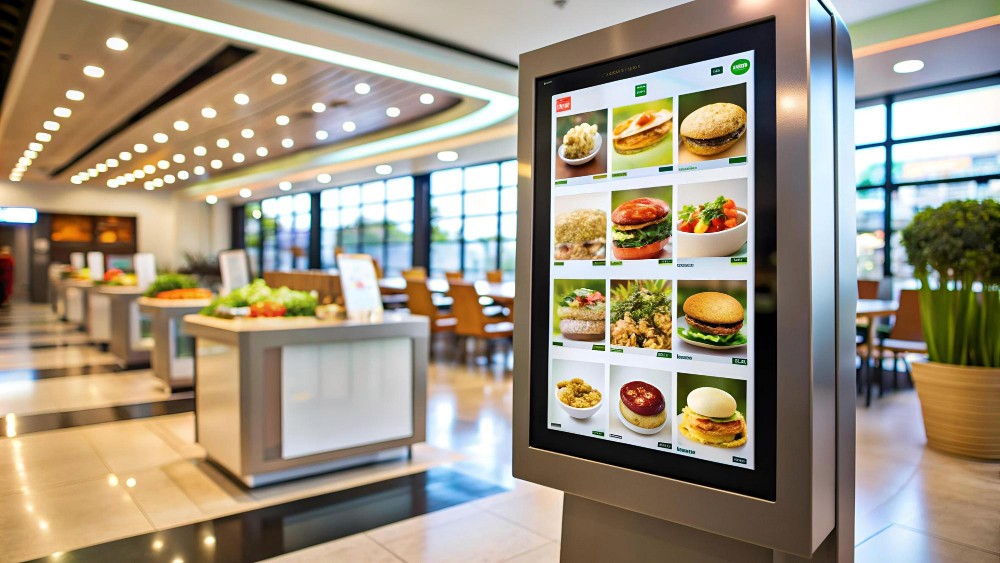
This QSR tech means guests can use touchscreens to place and personalize their orders as needed.
Data shows consumers prefer self-service kiosks when placing orders in QSRs. Nearly 61% say they want more kiosks in the restaurants they visit, citing better accuracy, convenience, and speed.
These kiosks also present a great opportunity for dining concepts to boost average guest spend. 72% of users say they’ve noticed their order sizes increase when ordering via a kiosk.
Kiosks also come with contactless ordering and payments, reducing cashier visits, wait-time, and improving table turnover rates.
AR and VR dining experiences
Augmented Reality (AR) and Virtual Reality (VR) are expected to play a big role in years to come, transforming the dining experience.
AR can enhance menus with 3D visualizations and interactive elements, while VR can create immersive dining experiences and offer unique training opportunities for staff.
AR and VR can offer more opportunities for personalization, engagement, and experiential dining for guests. They can attract curious guests and boost retention in the competitive hospitality industry.
Predicative inventory management
Last but not least, predictive inventory management is a key restaurant tech trend for 2026. By leveraging data analytics, restaurants can forecast demand, optimize inventory levels, and minimize waste.
Predictive analytics analyze historical data, seasonal trends, and even weather patterns to guide purchasing decisions. This data-driven approach reduces waste, lowers costs, and aligns with sustainability goals. This can contribute to bolstering a restaurant's profit margins significantly.
It’s important you use restaurant inventory management software that meets your needs and your growth strategy. Supy and Foodics are great examples.
What Do Restaurant Tech Trends Really Mean in 2026?
Restaurant tech trends in 2026 aren’t about adding more tools. They’re about building a connected experience across guests, teams, and partners.
The most competitive restaurants are aligning their technology around three core pillars: guest experience, team experience, and partner ecosystem experience.
Guest experience
Technology now shapes the entire restaurant guest journey, before, during and after the visit.
From personalized reservations and digital menus to automated surveys and targeted marketing, modern concepts are using data to personalize dining experiences.
Restaurant CRM systems segment guests based on visit frequency, preferences, and spend, enhancing communications and enabling tailored offers.
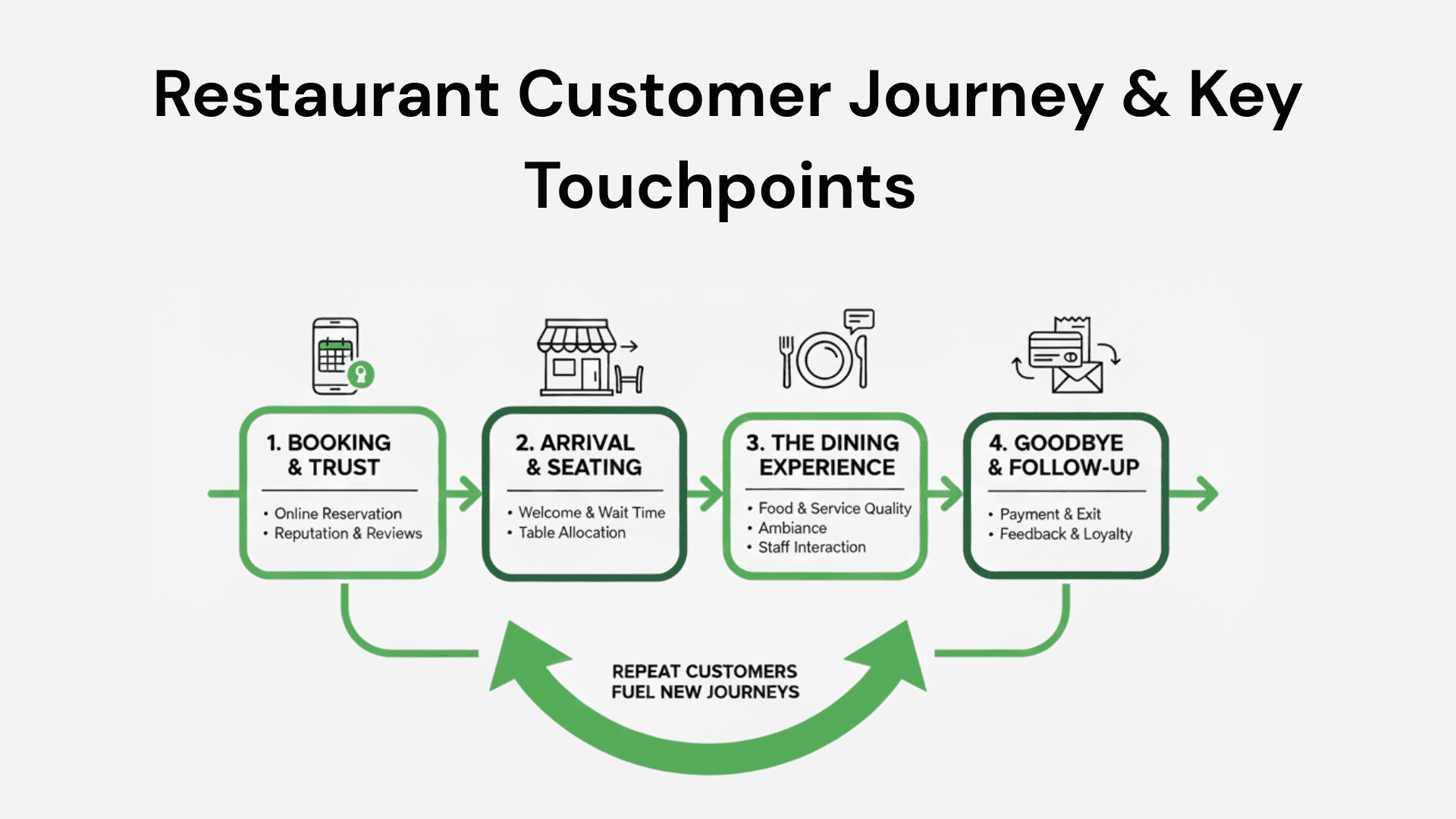
Instead of fragmented data across spreadsheets or disconnected systems, operators are centralizing guest information to increase repeat visits, drive loyalty, and boost revenue per table.
Platforms like Servme support this by connecting reservations, guest data, feedback, and marketing automation into a unified view of each customer.
Team experience
High-performing venues are moving away from static floor plans, manual SOP binders, and reactive service workflows. Instead, they’re adopting real-time table management, integrated reporting, and automated communication tools that reduce friction for front-of-house teams.
When staff can see table status instantly, anticipate demand, and access guest insights, service becomes smoother and faster.
The result: better table turnover, fewer errors, and more time spent on meaningful guest interactions.
Partner ecosystem experience
The strongest restaurant tech stacks don’t operate in isolation.
Restaurants are building ecosystems where reservation systems, POS platforms, payment providers, marketing tools, delivery channels, and workflow software communicate seamlessly.
This enables smarter forecasting, clearer reporting, and more informed decisions.
Servme acts as a central player, bringing together your entire restaurant ecosystem into one place, one dashboard, one screen.
Servme integrates with key partners across POS systems, booking channels, phone tech, payments, and more, while powering reservations, CRM, marketing automation, and guest engagement.
Final Words
The pace of change in restaurant technology shows no signs of slowing. From automation and AI to personalized guest experiences and streamlined operations, the right systems help restaurants stay competitive, profitable, and guest-focused.
2026 isn’t about chasing trends. It’s about connecting guest data, empowering your teams, and building a seamless partner ecosystem.
Technology doesn’t replace hospitality; it amplifies it.
If you’re evaluating how your stack supports guest experience, team performance, and long-term growth, now is the time to reassess your tools.
By embracing these restaurant technology trends, you can boost efficiency, elevate satisfaction, and unlock new revenue opportunities in 2026 and beyond.
Further Reading
What’s the Best Reservation System for Restaurants?
12+ Tips to Prepare Your Restaurant for Peak Seasons
Discover How Hyatt Regency Dubai Venues Boost Retention with 88,000 Guest Profiles Using Servme
7 Reports Every Restaurant Needs to Measure ROI & Success
The Starter’s Guide to WhatsApp Business for Restaurants
Nada Sobhi
Operations
Tips and Insights to help you run a better business

Restaurant growth insights, delivered monthly
Join 4,000+ restaurant operators receiving marketing tips, guest experience best practices, and product updates in their inbox.