
If you run front-of-house or own the reservation decision, you are here to pick a booking system that will speed up seating, reduce no-shows, and grow revenue.
In this guide, we’ll compare the top restaurant booking platforms, showing you how they actually work, and helping you choose the best fit for your venue and budget.
By the end, you will know which tool matches your floor plan complexity, data needs, and marketing goals.
Keep reading to find the right software that will maximize your table turns and boost your revenue.
How does a restaurant reservation system work?
A restaurant reservation system acts as a central hub for managing all types of bookings: online, offline, phone, or via third-party channels.
It functions as a dynamic restaurant management system, allowing staff to visualize the floor plan and assign tables based on real-time availability to avoid double bookings and improve table turnover.
The system also secures revenue with deposits or pre-authorizations and automates guest communication with confirmations, reminders, and post-visit surveys.
This improves guest loyalty, reduces no-shows and last-minute cancellations, and keeps your entire front-of-house (FOH) operation running smoothly.
Why Do You Need Restaurant Booking Software?
Here are the top benefits of using a restaurant reservation management system.
Seamlessly manage all your reservations
Restaurant booking software acts as a central hub for all incoming bookings, whether they come from your website, an offline waitlist, or third-party booking channels like Tripadvisor and Zomato, or even a phone call.
This system eliminates the risk of double-bookings, helps you track booking sources, and enhances table turnover.
Table and seating management
Besides reservations, restaurant booking software acts as a table and seating management system. It helps you visualize your current floor plan, assign tables based on real-time table availability, helping you maximize capacity and reduce wait times.
Integrated floor planning features
Modern restaurant booking systems often come with floor planning features, allowing you to digitally map your restaurant layout.
This gives your staff a clear, visual guide to manage staff and guest flow, benefit from automated recommendations for large groups, and make on-the-fly seating arrangements easily and efficiently.

Secure revenue with deposits
For large parties or peak hours, some systems help you secure reservation deposits as part of the booking process. This protects your revenue and reduces no-shows and last-minute cancellations, offsetting the cost of an empty table.
Automated communication
Besides deposits, restaurant booking software comes with automated and customizable communication features, including SMS, WhatsApp, and email. This helps you create personalized reminders and confirm bookings or cancellations, and also reduces no-shows.
Marketing features
This option varies. However, the best restaurant reservation systems come with basic to advanced marketing features, mainly email, SMS, and WhatsApp marketing for restaurants and bars.
This allows you to collect customer data and log it into your restaurant’s CRM, ensuring targeted email campaigns, SMS marketing, promotions, and loyalty offerings.
Further reading: How Personalization Begins with Restaurant CRM Software [Checklist]
What Is the Best Restaurant Booking Software?
Now, let’s look at the top contenders in reservation management to help you identify the best restaurant booking software for your business.
Servme
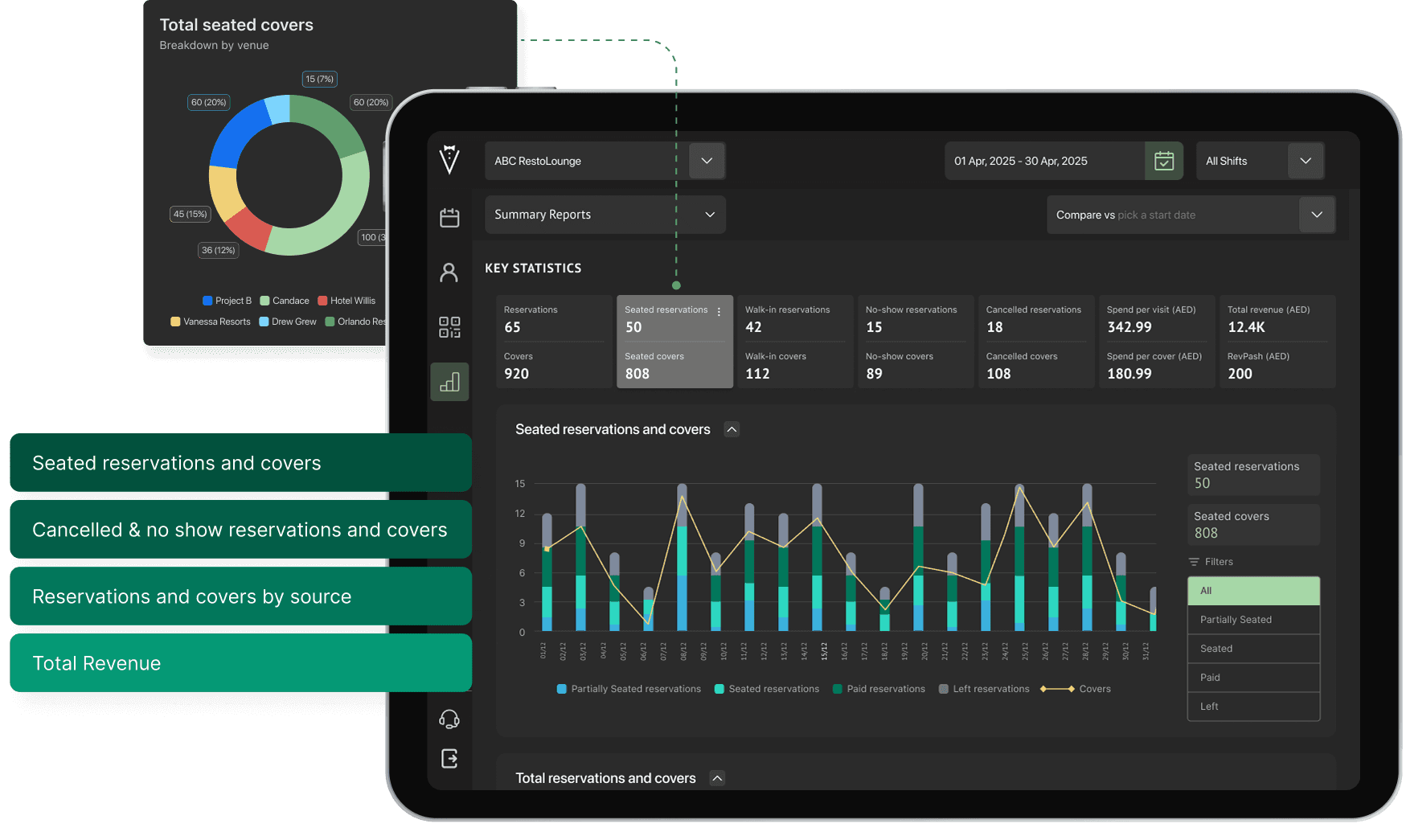
One of the best restaurant booking software is Servme. This guest experience management platform is designed for managing single and multi-location restaurants and bars, restaurant groups, and hotel dining concepts and pool bars.
Servme focuses on driving direct, commission-free bookings and maximizing value through a powerful CRM.
This F&B booking system also comes with a highly customizable open API, making it the platform of choice for complex operations that require deep system linking including POS, PMS, and loyalty.
Reservation, seating, and waitlist: Servme offers a comprehensive, real-time booking system, helping you manage online, offline, and phone bookings. Our dynamic table and seating management system includes customizable floor plans and an efficient digital waitlist for walk-ins, ensuring streamlined operations and enhanced table turnover.
CRM & detailed guest profiles: Build a rich, centralized guest database, logging visit history, preferences, allergens, dietary requirements, and past spend across all your venues. This helps your staff deliver highly personalized and memorable service.
Marketing platform: Servme comes with restaurant marketing automation features so you can create targeted email, SMS, and WhatsApp marketing. Whether you want to create restaurant email campaigns or a monthly newsletter, you can do it with Servme. Use the CRM to segment guests and auto-tagging for ultra-personalization. Create guest tags like ‘first-timer,’ ‘VIP,’ ‘Lapsed,’ ‘Chocolate-lover,’ ‘Valentine’s Day’ to personalize campaigns and promotions. These features help you fill tables during slow periods and drive loyalty and repeat business.
Accessibility: This restaurant reservation management system is accessible across web browsers, tablets, and a dedicated mobile app, across Android and iOS. It gives your FOH team the flexibility to manage reservations and seating from the host stand or directly on the floor.
Analytics & reporting: Provides real-time, actionable insights and advanced reporting on performance metrics such as cover counts, turn times, booking source tracking, overall guest spend, and more for data-driven strategies and decisions.
No-show prevention: Servme uses smart payment rules, such as deposits, pre-authorizations, or cancellation fees for large parties or peak shifts. This, combined with automated SMS/email reminders, dramatically reduces no-show rates.
Extensive integration capabilities: Servme ensures a connected restaurant ecosystem, connecting your tech stack with major booking channels and maximizing your reach and operational efficiency via extensive integration capabilities. From capturing reservations via global booking channels like Tripadvisor and Zomato, Reserve with Google, and social platforms like Instagram and Facebook to F&B POS integrations for accurate spend data, alongside phone integrations that instantly pull up a guest's CRM profile when they call.
No Cover Fees: Servme operates on a flat monthly subscription model and doesn't charge commission or cover fees for bookings made through any channel, allowing you to keep 100% of your reservation revenue.
Pricing
Servme's pricing plans begin at $129 per month and can go up to $299/month. We offer customized enterprise plans for restaurant groups and multi-venue concepts.
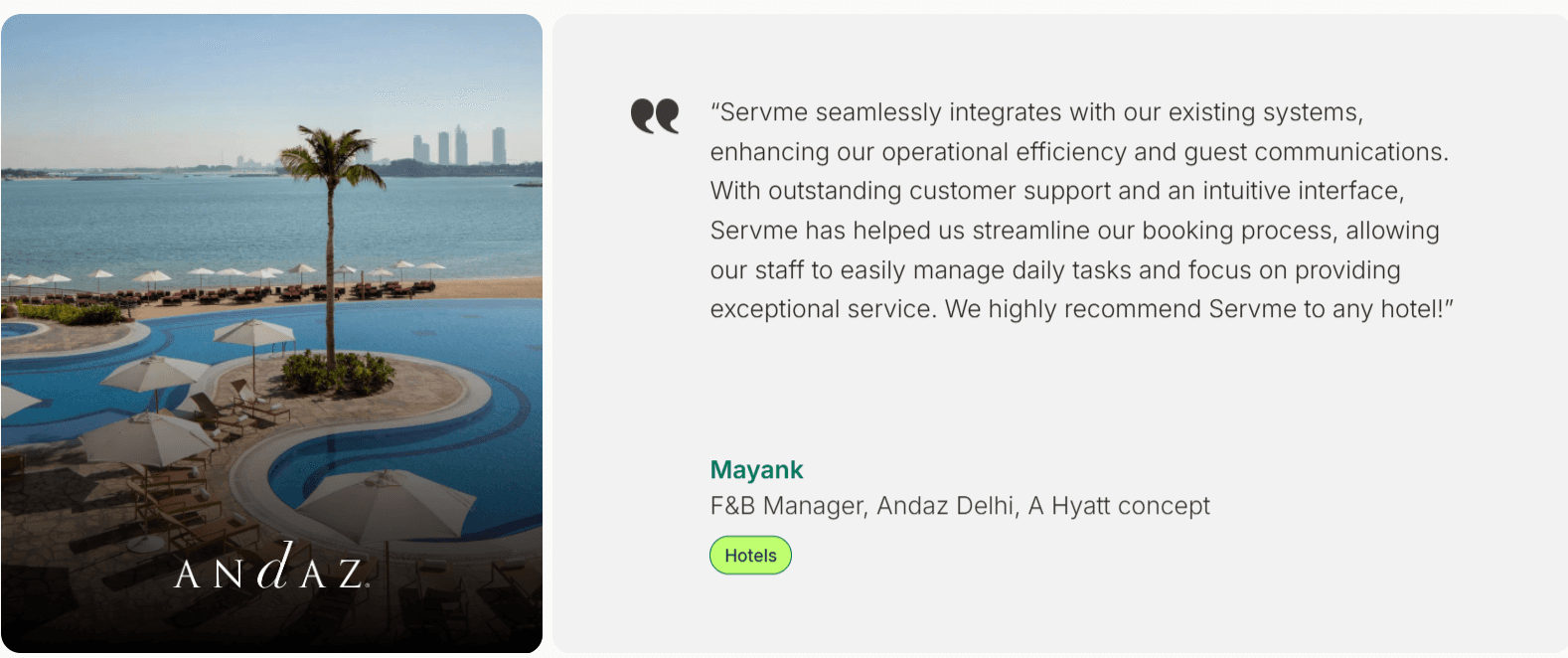
Book a personalized demo to see how Servme can help!
OpenTable
One of the most popular reservation systems, OpenTable is a dual-facing platform with a massive diner network to drive customer acquisition for its partners.

Table management features: Includes real-time table management, customizable floor plans, and efficient flow management.
Large global network: Spanning various countries and cities, OpenTable provides access to millions of active diners globally, acting as a major acquisition channel to fill seats.
Ticketed experiences: Allows restaurants to create and sell tickets for special events, tasting menus, and off-premise offerings.
No-show protection: Offers deposit collection and credit card hold capabilities to protect against last-minute cancellations.
Pricing
OpenTable operates on a subscription and cover fee hybrid model. Plans start around $149/month plus varying cover fees (e.g., ~$1.50 per network cover, ~$0.25 per website cover), with higher-tier plans available up to $499/month for full features.
Further reading: Compared: Sevenrooms vs OpenTable vs Servme
Resy
Backed by American Express (Amex), Resy is a popular restaurant booking software for fine-dining concepts. Focusing on a premium guest experience and strong operator tools, Resy is often used by venues seeking a sleek, design-focused system.

Premium guest network: Provides exclusive access to high-spending American Express Card Members, who statistically book and spend more.
Robust CRM: This restaurant booking system helps staff track visit history, special occasions, and guest preferences for enhanced, personalized service.
Customizable reservations: Resy gives operators control over booking rules, pricing, and the sale of ticketed events.
Pricing
Resy offers a flat monthly subscription, often with no cover fees for direct (website) bookings. Plans start around $249/month for reservation essentials, with the full-featured Platform 360 starting around $399/month.
Further reading: Resy vs Sevenrooms vs Servme: Find the Best Reservation System
SevenRooms
This data-driven guest experience and reservation platform works with wineries, bars, groups, and other types of F&B businesses.

Guest CRM: The platform’s comprehensive CRM helps operators build unified guest profiles across multiple venues.
Marketing automation: Enables operators to easily create and execute targeted, automated SMS and email campaigns based on guest segmentation.
Customer support: Only via email and appointment setting.
Pricing
SevenRooms does not publicly list pricing. Pricing is custom-quoted based on the number of venues and the specific suite of features required by the restaurant group or hotel brand. SevenRooms does require a one-time setup fee of $500.
Further reading: Top 9 SevenRooms Competitors and Alternatives
TableCheck
A popular restaurant booking system in Asia and Europe, TableCheck offers a guest management solution with a focus on white-label branding and preventing cancellations through pre-payment.
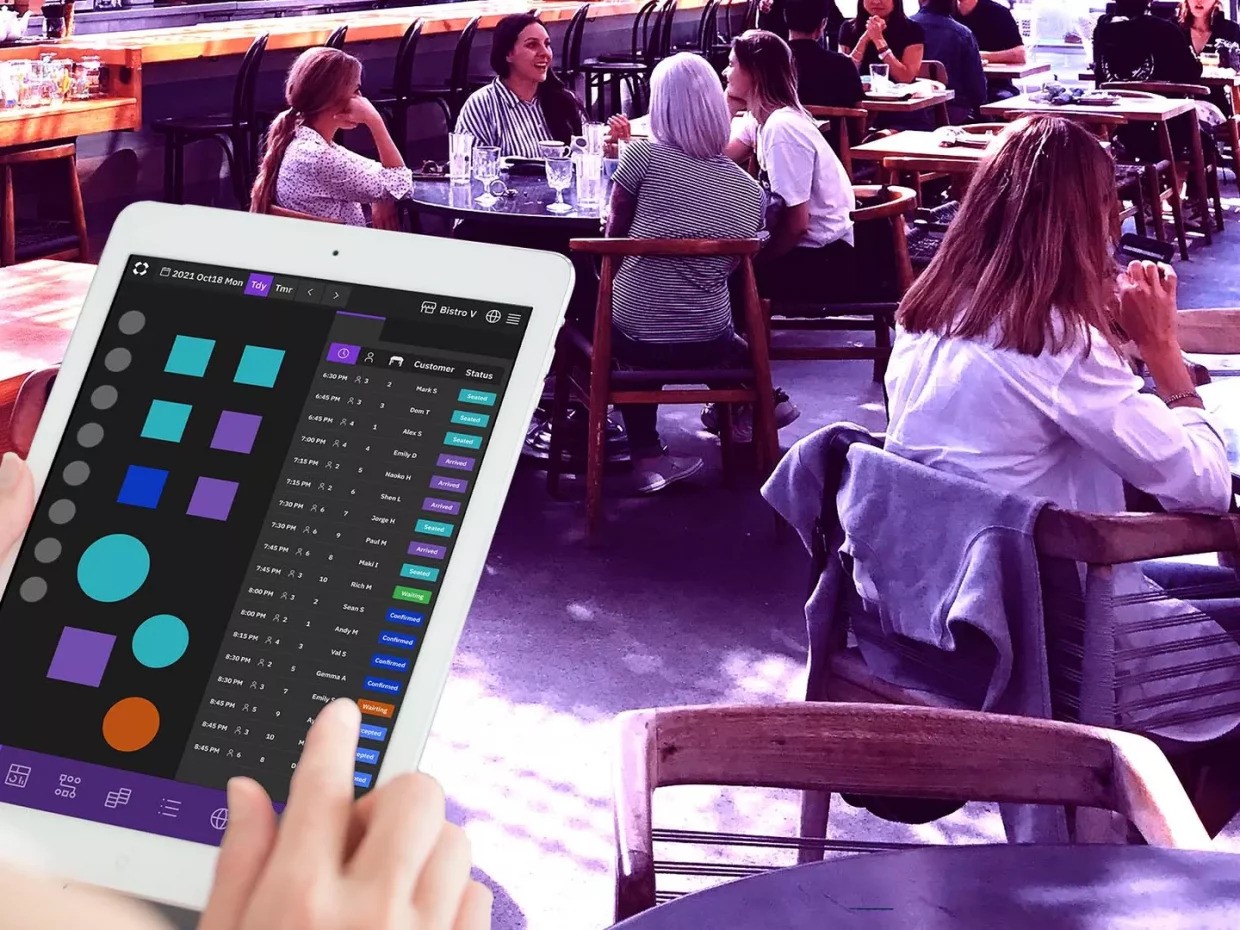
White-label solution: TableCheck provides a fully-branded, customized booking journey on your website, ensuring the guest experience is centered on your brand.
Fewer cancellations and no-shows: This platform offers robust features including requiring pre-payments, and cancellation fee charges.
Global focus: Supports multiple languages, including Japanese, Korean, English, and French.
Pricing
TableCheck doesn’t charge cover fees for bookings. The company doesn’t advertise its pricing plans on its website. Pricing is provided upon request.
Further reading: How to Create a Restaurant No-Show Policy [Templates included]
TheFork
Owned by Tripadvisor, TheFork is a leading restaurant booking system with operations focused in Europe, Latin America, and Australia.
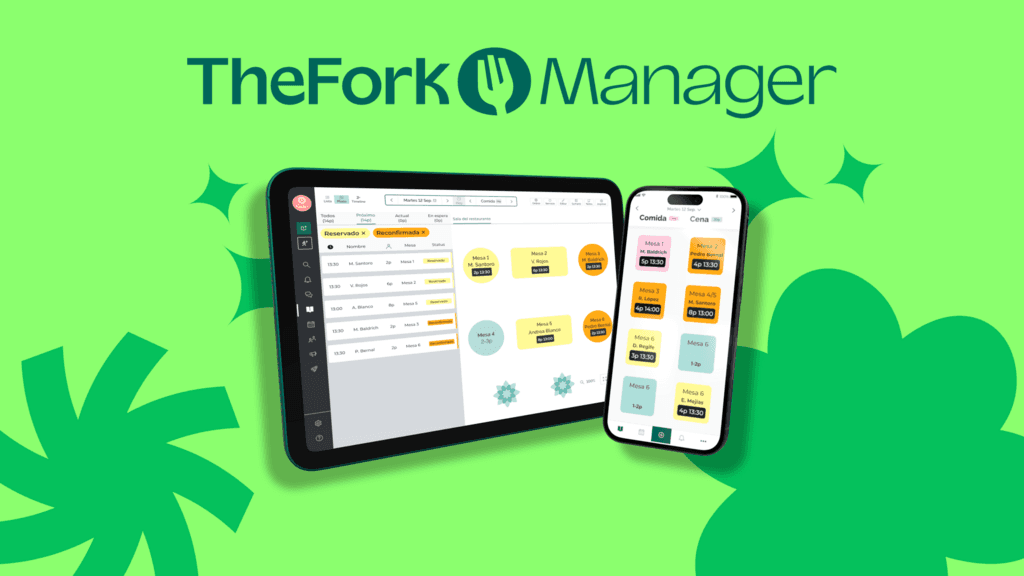
Vast diner marketplace: Provides access to a huge customer base of TheFork and its parent company, Tripadvisor, for high-volume network bookings.
Loyalty program: TheFork’s YUMS loyalty program provides special offers to help restaurants drive bookings during off-peak times.
Multiple operations features: The software includes comprehensive tools for table management, smart floor plans, waitlists, and availability control.
Reputation management: Integrated with Tripadvisor reviews, TheFork allows restaurants to manage their online reputation within one system.
Pricing
TheFork offers a mix of models but doesn’t explicitly mention their starting price on their website. However, they charge a commission or fee for reservations coming from TheFork and partner marketplaces.
Further reading: For Restaurants: How to Add the Reserve Button on Instagram
EatApp
Eatapp positions itself as an all-in-one solution for reservation, guest, and table management, with a strong emphasis on automation.

Booking management: This restaurant booking system helps restaurants manage online and in-person bookings and seating arrangements.
Customer-facing features: Eat App offers guest-facing features and listing so guests can book tables directly.
Integrated CRM and marketing: Builds rich, searchable guest profiles, along with automated marketing features to drive guest loyalty and repeat business.
Pricing
Eatapp uses a tier-based subscription model with a free tier for up to 30 covers/month. Paid plans range from $79 per month to $319 per month.
Tableo
This cloud-based table management system helps dining concepts protect revenue and optimize seating and bookings.
AI-Powered Optimization: Uses machine learning (AI Assistant) to suggest optimal booking times and seating arrangements, helping to maximize table turnover and revenue.
Deposits and pre-payments system: Features built-in tools for collecting deposits, pre-payments, and no-show fees.
Booking integrations: Tableo offers restaurant booking channels and integrations including Reserve with Google, Michelin Guide, and others.
Pricing
Tableo offers a Free plan (up to 100 covers) and tiered paid subscription plans. The Lite plan (up to 150 bookings) is around €49/month, with the Gold plan (unlimited bookings) starting around €139/month.
Further reading: 7 Valentine’s Day Ideas for Restaurants [+11 Preparation Tips]
What to Consider When Choosing Restaurant Booking Software?
Selecting the best restaurant booking software requires looking beyond the feature list and evaluating how the platform aligns with your core business strategy.
Here are a few points to consider:
Ease of use: The restaurant booking system’s interface must be intuitive for your host staff and the widget for your guests. A complex system will require onboarding time, may slow down service, and increase errors. Look for a user and mobile-friendly system that enhances, not hinders, operations.
Responsive support team: Ask about how onboarding works, customer support, and similar questions to ensure you get reliable customer support. For example, with Servme, you get a dedicated account manager to handle onboarding, queries, and reporting.
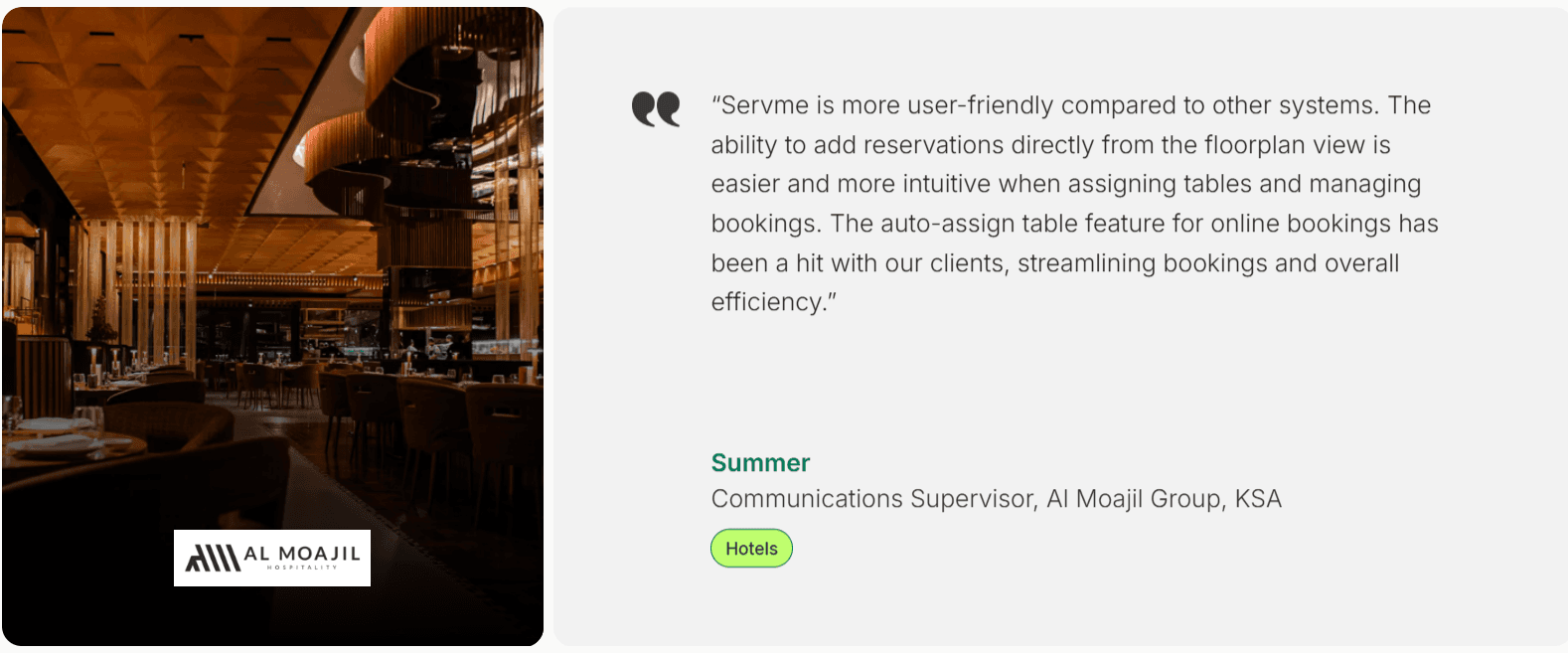
Data ownership: Choose a table reservation system that ensures you own and control your CRM profiles, which help you build loyalty and create personalized marketing campaigns.
Pricing: Ask about pricing and special offers (if available). Most of the above restaurant booking systems offer a discount price on annual subscriptions. Choose a solution that doesn’t require commissions or booking fees.
Marketing features: Consider restaurant reservation software that comes with built-in marketing tools. Many platforms offer SMS and email marketing. Servme takes it a step further with personalized WhatsApp marketing features, along with a large database of ready templates. These features streamline marketing, allowing you to create a complete personalized messaging strategy for your restaurant.
Availability of integrations: When comparing reservation management systems, consider solutions that seamlessly integrate with your existing restaurant tech stack, including POS system, website, PMS for hotels, others. Consider booking channel integrations like Google Reserve, Zomato, Tripadvisor and others. Servme offers localized booking channels for the UK, Saudi Arabia, India, the UAE, and others.
Want to experience the power of an F&B booking system? Book your personalized demo with Servme to see it in action!
Nada Sobhi
Operations
Tips and Insights to help you run a better business

Restaurant growth insights, delivered monthly
Join 4,000+ restaurant operators receiving marketing tips, guest experience best practices, and product updates in their inbox.