
Diners make decisions fast. Before they call for a reservation or walk through your door, most of them check Google.
97% of consumers read online reviews before they buy. For restaurants, that means your Google rating and review count often determine whether a guest books a table or moves on to the next option.
In this guide, we’ll cover what Google reviews are, why they matter, how to collect them consistently. We’ll also show you how to handle negative feedback before it damages your restaurant’s reputation, along with tips to track your performance when collecting feedback.
What Are Google Reviews for Restaurants?
Google Reviews are ratings and written feedback that diners leave on your restaurant’s Google Business Profile after visiting. These reviews appear directly in Google Search and Google Maps, making them one of the first things potential guests see when deciding where to dine.
Beyond star ratings, reviews often include comments about the food, service, atmosphere, pricing, and overall experience, giving future diners a quick snapshot of what to expect.
Google has also introduced optional review questions, such as price range, wheelchair accessibility, and parking availability, adding more context for prospective guests.
For restaurant operators, Google reviews are a critical part of reputation management. They influence guest trust, search visibility, and booking decisions.
Reviews now play an even larger role as AI-powered tools like Gemini and ChatGPT analyze review content to answer questions such as “Where is the best fine dining restaurant in Dubai?” or “Which restaurant is good for large family gatherings?”
In other words, reviews are no longer just social proof, they are data that AI uses to recommend restaurants.
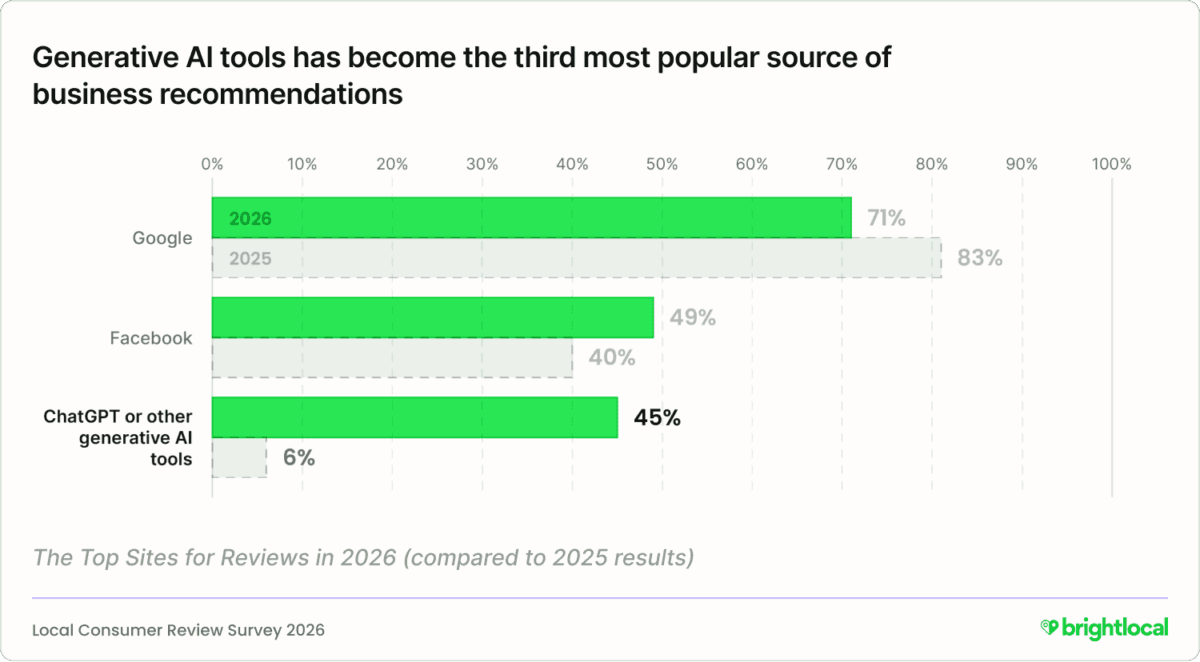
Data also shows consumers are turning to AI tools for local recommendations. This trend has grown from 6% in 2025 to 45% in 2026, making generative AI tools the “third most popular source of business recommendations.”
Why Are Google Restaurant Reviews Important?
Social proof at scale Google reviews remain a credible source of social proof, “hosting 73% of all reviews for local businesses.” It shows potential diners others’ experiences with a particular concept.
Local search visibility: Reviews on Google directly influence your local SEO. The more reviews you have, and the more recent they are, the better you rank in searches like "Italian restaurant near me" or "best rooftop restaurant in Dubai.”
Guest trust : Nearly 88% of diners trust online reviews as much as personal recommendations from friends. After reading positive reviews, 31% visit a business location, while 20% contact the business, and 20% make an appointment or booking.
Recency matters more than volume: 73% of consumers view “recency” as an important factor when reading reviews. Often this covers the last 30 days. This is why you constantly need to collect reviews to ensure freshness, which is more important than total count.
The Problem Most Restaurants Have with Reviews
Despite serving hundreds of guests every week, most restaurants struggle to build consistent review volume.
The reasons are almost always the same:
Staff forget to ask, especially during busy shifts
There is no system for following up after a visit
Requests go out at the wrong moment, or to the wrong guests
No one tracks whether guests were asked or responded
The fix is not reminding staff more often. The fix is building the review collection process into your post-service workflow, the same way you close tables or reconcile the POS.
How to Collect Google Reviews for Your Restaurant
The most consistent venues treat review collection like any other operational task.
Here are 5 practical ways to generate Google reviews for your restaurant, while maintaining a premium guest experience.
Automated post-dine surveys
One of the most reliable ways to collect reviews is through automated post-dining guest surveys. After a reservation closes, a short message goes out to the guest via Email, WhatsApp or SMS, thanking them for visiting and inviting them to leave feedback.
Unlike paper surveys, a digital survey is linked to a specific guest profile in your restaurant CRM. This makes follow-up simple and gives you a record of who responded and when.
Restaurants using Servme can trigger these messages automatically the moment a table is marked as complete. No staff involvement needed. The process runs consistently whether you serve 40 covers or 400.
See Servme’s automated surveys in action. Get your free consultation now!
QR codes and digital table tents
QR codes make it easy for guests to leave a review while they’re still at the restaurant. Many venues place them on receipts, menus, table tents, and bill folders so guests can scan and share feedback.
For best results, link directly to the Google review form rather than your general profile. This removes extra steps and improves completion rates.
Train staff to ask for reviews
Your front-of-house team is already in conversation with guests throughout the meal. That puts them in the best position to ask for a review.
The key is to ask naturally at the right moment, such as when guests compliment the food or when they are paying the bill.
Here’s an example script:
“It was a pleasure hosting you tonight. If you have a moment to share your feedback on Google, it really helps our team.”
This keeps the tone natural. It should feel like a genuine ask, not a scripted request.
Generate more scripts with our AI and ChatGPT prompts for restaurants guide.
Incentivize your team
Besides training your FOH team to ask for reviews, give them a reason to stay consistent. Incentivize them to ask for reviews and to keep delivering standout service that guests want to write about.
Some restaurants even use review data to recognize team members who are mentioned by name in positive feedback.
Bonus idea: Reward employees who are named in 5-star reviews. Even small incentives, like a monthly bonus or other perk, can motivate staff to deliver memorable service that drives guest loyalty repeat business.
Leverage moments of delight
Timing matters when asking for reviews. Guests are most likely to respond positively when the experience is at its emotional high point.
Bonus idea:
Ask for a review during the “peak-end” moment of the meal. That’s right after a successful wine pairing, a special dessert presentation, or a complimentary birthday gesture.
Guests are far more likely to leave a positive review when they feel delighted.
Managing Reviews at Scale for Restaurant Groups
For restaurant groups managing several venues, handling reviews manually is not realistic.
Restaurant tech, like reservation and guest experience management software, like Servme, helps you track feedback centrally, uncover trends, compare performance across locations, and flag recurring issues before they escalate.
Sentiment analysis tools can categorize review comments into buckets, like wait time, food quality, or ambiance, helping operators quickly identify recurring issues.
Centralized dashboards help you monitor ratings, volume of reviews, common issues, and overall guest feedback across venues from a single interface. This ensures faster operational decisions and more consistent guest experiences.
Further reading: 15 Tips for Managing Multi-location Restaurants
Handling Negative Reviews: Turning Critics into Fans
The key to providing a positive guest experience and getting repeat business is handling your guests, including angry guests and negative reviews.
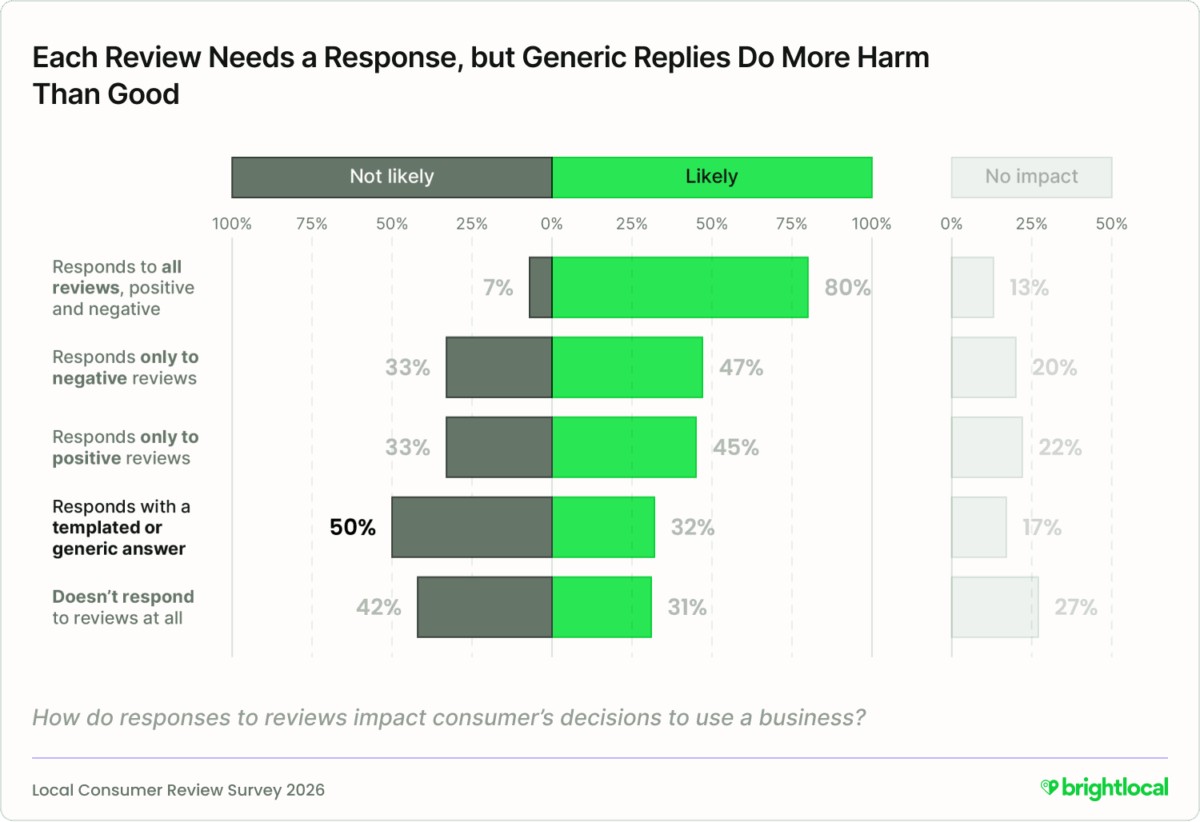
The BrightLocal survey found 80% of consumers were more likely to visit a business if they responded “to all of its reviews,” while 42% said it’s unlikely they’d visit if the business “never replies.”
This proves the importance of responding to all your reviews. More importantly, you can’t ignore or let bad restaurant reviews sit. It shows you don’t care.
For restaurant operators and hospitality managers, every negative comment is an opportunity to showcase the concept’s professionalism and improve the guest experience.
Examples of negative restaurant reviews
Most negative reviews fall into common categories. Understanding these patterns helps teams respond quickly and consistently.
Negative review examples of restaurants and bars include:
Slow service: “We waited almost 40 minutes before anyone took our order.”
Food quality issues: “The steak arrived cold and had to be sent back.”
Reservation or wait-time problems: “We had a booking but still waited 25 minutes for our table.”
Handled properly, these situations can often be resolved. Sometimes, they may be even converted into positive follow-up reviews.
How to Respond to Guest Reviews
A professional response shows both the reviewer and future diners that the restaurant takes feedback seriously.
Rule 1: Stay professional
Never argue with the reviewer or dismiss their concerns. Acknowledge the issue, thank them for the feedback, and show your team takes their comment seriously.
Rule 2: Respond quickly
Speed matters. Address negative reviews within 24–48 hours, while the issue is still relevant and the guest feels heard.
Rule 3: Take it offline
Whenever possible, invite the guest to continue the discussion privately. Provide a contact email or phone number so you can address the issue directly.
Handled correctly, restaurant user reviews, even negative and critical ones, can strengthen trust.
A thoughtful response shows potential guests your restaurant is committed to improving the experience and maintaining high hospitality standards.
Further reading: How to Reply to Negative Restaurant Reviews [with Templates]
How to Track Your Progress for Google Reviews?
Apart from automating the process and encouraging team members, it’s important to track your performance. This improves consistency and helps you see progress.
Here are the top metrics to measure monthly, and you can do so via a restaurant reservation system, like Servme.
Metrics | Why it Matters |
Total review count | Overall growth and momentum |
Average star rating | Overall guest sentiment |
Review response rate | Shows engagement and professionalism |
Reviews per 100 covers | Normalize volume against actual foot traffic |
Benchmark targets to aim for:
Small restaurant: 10 to 15 new reviews per month
Busy or mid-sized concept: 30 to 50 new reviews per month
Multi-location group: 100 or more reviews per month across all venues
FAQs about Google Restaurant Reviews
What is an example of a restaurant review?
A good restaurant review is clear, specific, and highlights the overall dining experience. It should cover the food including a specific dish or drink, service, atmosphere, and overall impression about the visit.
Example: “Great dining experience. The seafood risotto was excellent. The staff were attentive throughout the evening. Enjoyed my time and plan to visit again soon.”
How can I help my guests leave reviews?
The most effective methods are: sending a post-dining request via WhatsApp or SMS, placing QR codes on receipts or table signage, training staff to ask satisfied guests directly, and using a reservation system that automatically triggers review surveys after each visit.
When should I ask a guest for a review?
The optimal time is close to the dining experience. Preferably within 2-3 hours after the guest leaves or within 24 hours. This ensures the experience is still fresh in their mind.
What are 5-star review examples for restaurants?
Here are several short examples of 5-star examples of restaurant reviews:
“Excellent experience. The grilled seabass was outstanding and our server was attentive from start to finish.”
“Fantastic dinner. The staff made our anniversary special and the dessert recommendation was perfect.”
“Great atmosphere and delicious food. The lamb kebabs were a highlight. Can’t wait to visit again!”
Can I offer a discount for a Google review?
No. Offering incentives such as discounts or free items in exchange for a Google review violates Google’s policies.
Google requires reviews to be authentic and unbiased. Businesses that attempt to incentivize reviews risk:
Review removal
Loss of reviews
Suspension of their Google Business Profile
How do I handle fake or bot reviews?
Open the review in your Google Business Profile, click "Report review," and select the appropriate reason such as spam or fake content. If the review violates Google's policies, it may be removed after moderation.
How many Google reviews does a restaurant need?
There is no fixed number, but consistency matters more than volume. Restaurants that regularly collect new reviews tend to perform better in search visibility and build stronger trust with diners.
Protect & Improve Your Restaurant’s Reputation in 2026
The restaurants that consistently outperform competitors on Google are not always the best at cooking or service. They are the best at systematically capturing guest sentiment after every visit.
Collecting Google reviews should not be something you run as a one-off campaign. It should run quietly in the background every day, tied to your reservation workflow, and require minimal manual effort from your team.
With the right tools in place, review collection becomes a low-effort, high-return part of how you operate.
Ready to automate your guest feedback?
Servme’s reservation and table management system helps restaurants automatically trigger review requests, capture guest feedback, and address concerns before they become public reviews.
Book a personalized demo or free consultation to see how leading restaurants and groups scale their review collection and streamline their operations.
Nada Sobhi
Marketing
Tips and Insights to help you run a better business



Restaurant growth insights, delivered monthly
Join 4,000+ restaurant operators receiving marketing tips, guest experience best practices, and product updates in their inbox.